Home › Knowledge › Medicare Supplement (Medigap)
Exploring the Pros and Cons of Medicare Supplement Plan N
CJ Karrer
Writer · Reviewed by Richard ChanUpdated Jun 12, 2026
5 min read
Key Takeaways
Medicare Supplement Plan N covers the Medicare Part A deductible and Part B coinsurance, making it a comprehensive Medigap option.
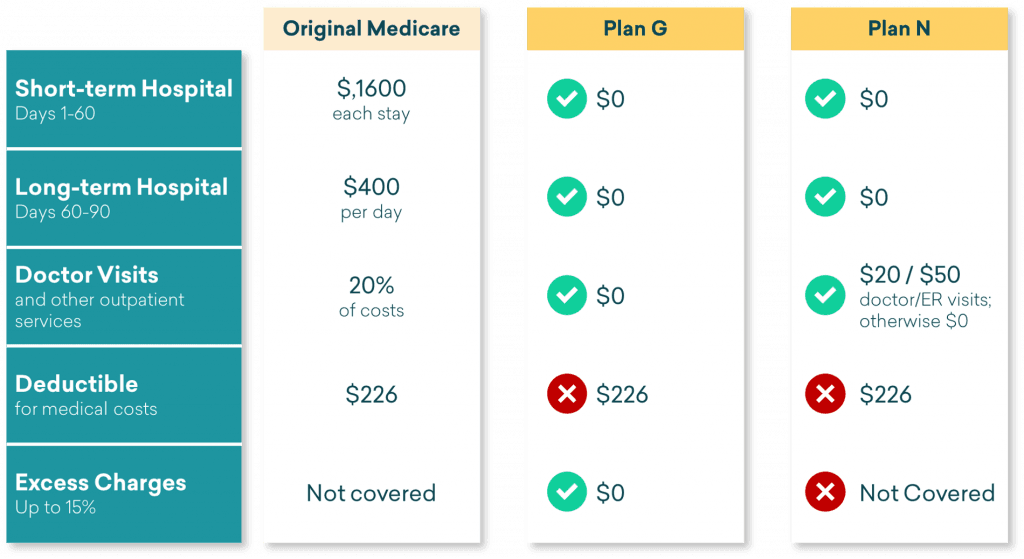
With Plan N, you are responsible for paying a copayment of up to $20 for some office visits and up to $50 for emergency room visits that do not result in inpatient admission.
Unlike Plan F or Plan G, Plan N does not cover Medicare Part B excess charges, meaning you may have out-of-pocket costs if your doctor does not accept Medicare assignment.
One of the most compelling features of Medicare Supplement plans is what they offer that Original Medicare simply can't match: predictable out-of-pocket costs and the freedom to see virtually any doctor in the country who accepts Medicare — no network restrictions, no referrals required. That freedom comes at a price, though. The most comprehensive Medigap plans can carry substantial monthly premiums, and for many beneficiaries, that cost is the primary barrier to enrollment.
That's where Plan N enters the picture. It's one of the more affordable Medigap options on the market today, designed to deliver meaningful coverage while keeping monthly costs lower than more comprehensive plans like Plan G. In this article, we'll break down exactly what Plan N covers, where it asks you to share the cost, and how to decide whether it's the right fit for you.
The Big Picture on Medicare Costs
Original Medicare is broad but not complete. It covers a wide range of medical services, but it doesn't pay the full bill — and one of the most consequential gaps is the 20% coinsurance that applies to virtually all outpatient medical services under Part B. That might not sound alarming in the abstract, but on a $1,000 service, you're on the hook for $200. On a $10,000 procedure, that's $2,000. For beneficiaries with chronic conditions or frequent medical needs, those costs can add up with startling speed.
That's precisely why many Medicare beneficiaries turn to a Medicare Supplement Plan — also called a Medigap plan. These are policies sold by private insurance companies to cover the "gaps" that Original Medicare leaves behind. Think of them as a financial safety net layered on top of your existing Medicare coverage.
In total, there are 10 Medigap plans available: Plans A, B, C, D, F, G, K, L, M, and N. All are federally standardized, meaning the benefits within each plan letter are identical regardless of which insurer sells it. What differs is the scope of coverage each plan type offers — and your monthly premium reflects that scope directly. More coverage means higher premiums; less coverage means lower premiums with some costs shared by you.
What Is Medicare Plan N?
A quick clarification first: if you search Medicare.gov for "Part N," you won't find anything — because it doesn't exist. "Part" refers to the official government Medicare program (Part A, Part B, etc.). "Plan" refers to the standardized Medigap plan letters sold by private insurers. The two terms get confused constantly, but the distinction matters. When we talk about Plan N, we're talking about a Medicare Supplement policy available from private carriers.
Plan N occupies a specific and strategically useful position in the Medigap lineup. It's more affordable than the most comprehensive options — Plan F (no longer available to newly eligible beneficiaries) and Plan G — while still delivering strong protection against the costs that matter most.
Medigap Plan N strikes a balance: comprehensive nationwide coverage at a lower premium, while retaining the same catastrophic coverage protections as Plans F and G for hospital and major medical costs.
What Are the Pros and Cons of Medicare Supplement Plan N Coverage?
The Pros of Medigap Plan N:
- Lower monthly premiums compared to Plan F and Plan G — the two most comprehensive options — which makes it meaningfully more budget-friendly for beneficiaries who are cost-conscious but still want solid protection.
- Strong coverage where it counts most. Plan N covers the Part A hospital deductible and Part B coinsurance for most services — meaning the catastrophic costs of a serious hospitalization or major medical event are well covered.
- Access to any Medicare-accepting doctor in the country, with no network restrictions. This is one of the most significant advantages Medigap plans hold over Medicare Advantage for beneficiaries who travel frequently or have established relationships with specialists they don't want to give up.
The Cons of Medigap Plan N:
- Copayments for office and emergency visits. Plan N's lower premium comes with modest cost-sharing: up to $20 for some outpatient physician visits and up to $50 for emergency room visits that don't result in inpatient admission. For frequent healthcare users, those copays can add up over the course of a year.
- The Part B deductible still applies. Unlike Plan G's high-deductible version or Plan F (for those who still qualify), Plan N requires you to pay the annual Part B deductible each year before coverage kicks in for outpatient services.
- Monthly premiums persist regardless of usage. Like any insurance, you pay whether you use it or not. In a healthy year with minimal medical needs, the premium still comes due.
- No coverage for Part B excess charges. This is Plan N's most notable gap relative to Plan G. If you see a non-participating Medicare provider, they may charge up to 15% more than the Medicare-approved rate — and Plan N won't cover that difference. In practice, this risk is limited: 98% of Medicare physicians and providers accept Medicare assignment. But if you live in an area with significant numbers of non-participating providers, or if you plan to see specialists who often don't accept assignment, this gap warrants careful consideration.
In Conclusion
Plan N occupies a genuinely useful middle ground in the Medigap marketplace. For beneficiaries who are in relatively good health, see doctors regularly but not excessively, and are comfortable with modest copayments at the point of care, Plan N can deliver strong financial protection at a meaningfully lower monthly cost than Plan G. For those who see providers frequently, live in areas with higher concentrations of non-participating doctors, or simply want to eliminate as many out-of-pocket variables as possible, Plan G may be worth the additional premium.