Home › Knowledge › Medicare Advantage
The Worst Medicare Advantage Plans in 2026
Vedanth Bhartee
Writer · Reviewed by Richard ChanUpdated Jun 12, 2026
12 min read
Key Takeaways
Some Medicare Advantage plans require strict prior authorization for certain medical services, which can delay or complicate access to care.
Medicare Advantage plans typically use network providers, and out-of-network care can result in significantly higher out-of-pocket costs or lack of coverage.
The Centers for Medicare & Medicaid Services (CMS) rates Medicare Advantage plans on a 5-star system to help beneficiaries evaluate plan quality and performance.
Key Takeaways
- In 2026, the average Medicare beneficiary will have access to 34 Medicare Advantage prescription drug plans, down slightly from 36 options in 2026.
- Despite insurer exits and market consolidations, overall plan availability remains robust. Nearly one-third of beneficiaries still have more than 50 plan options in their local county.
- Roughly 5% of Medicare Advantage enrollees are currently in a plan that will be terminated for 2026, and an additional 7% may face auto-assignment to a new plan due to market shifts.
- While many plans tout eye-catching extras, they can also carry hidden downsides like restrictive provider networks or staggering out-of-pocket costs. This makes reviewing the fine print an absolute necessity.
Navigating Medicare Advantage (also known as Part C) can easily feel like wandering through a maze of competing promises. It's no surprise these plans have surged in popularity, now covering more than half of all Medicare beneficiaries in 2026. As private, bundled alternatives to Original Medicare, they frequently dangle enticing perks like dental, vision, hearing aids, and gym memberships to win your business. However, when it comes to your health and financial security, flashy extras don't always equate to superior care.
For 2026, the average beneficiary is staring down a menu of 34 Medicare Advantage plans that include prescription drug coverage—and up to 42 total plans when you factor in non-drug options. Yet, beneath this illusion of abundant choice, insurers are quietly pulling out of counties, consolidating their offerings, and automatically shifting enrollees. The reality is that not every option on the market will serve your best interests.
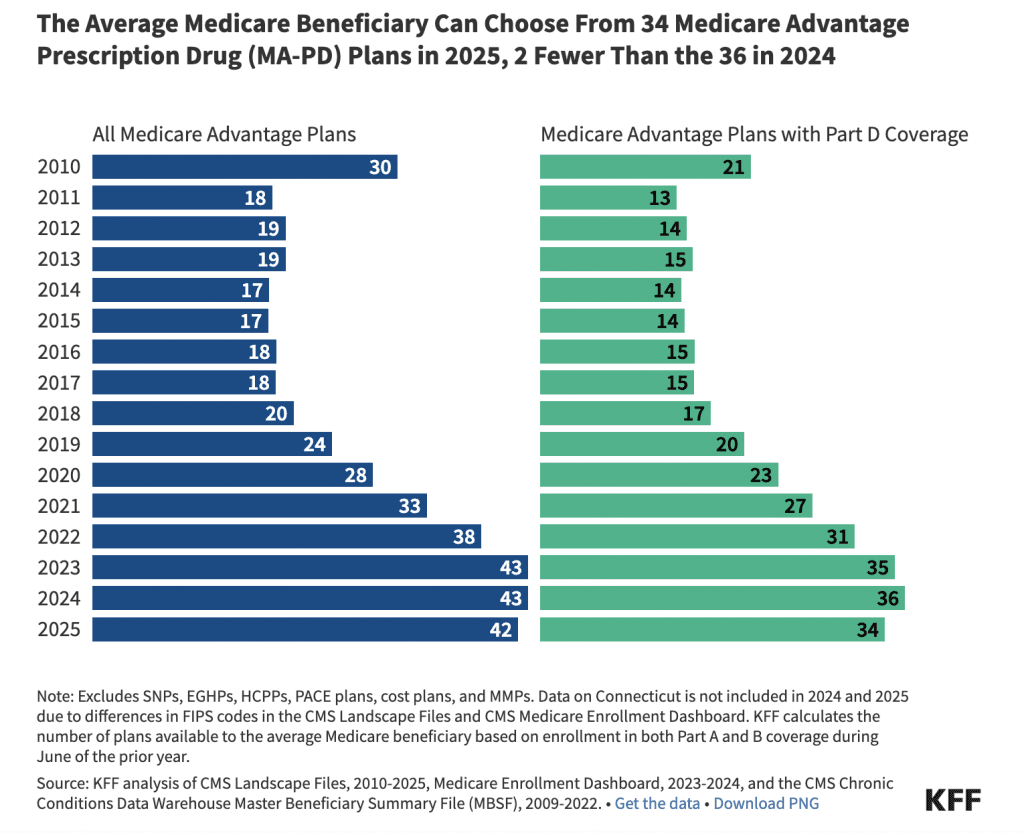
Faced with a dizzying proliferation of Medicare Advantage options, how can you spot the worst plans before they compromise your care or your wallet?
Common Traits of the Worst Medicare Advantage Plans
Strict Prior Authorization Rules
A frequent and deeply frustrating hurdle of Medicare Advantage plans is the requirement for prior authorization. In practice, this means your insurance company forces your doctor to ask for permission before they can proceed with specific treatments, surgeries, or diagnostic tests.
From an insurer's perspective, prior authorizations are a tool to rein in everyday healthcare costs. But from a patient's standpoint, these bureaucratic delays can be agonizingly detrimental, especially when you're already grappling with a difficult diagnosis.
In 2026 alone, insurers fielded over 53 million prior authorization requests—representing a sharp 13% jump from the previous year. For consumers, this translates into stalled medical care, mounting anxiety, and immense frustration for both patients and healthcare providers.
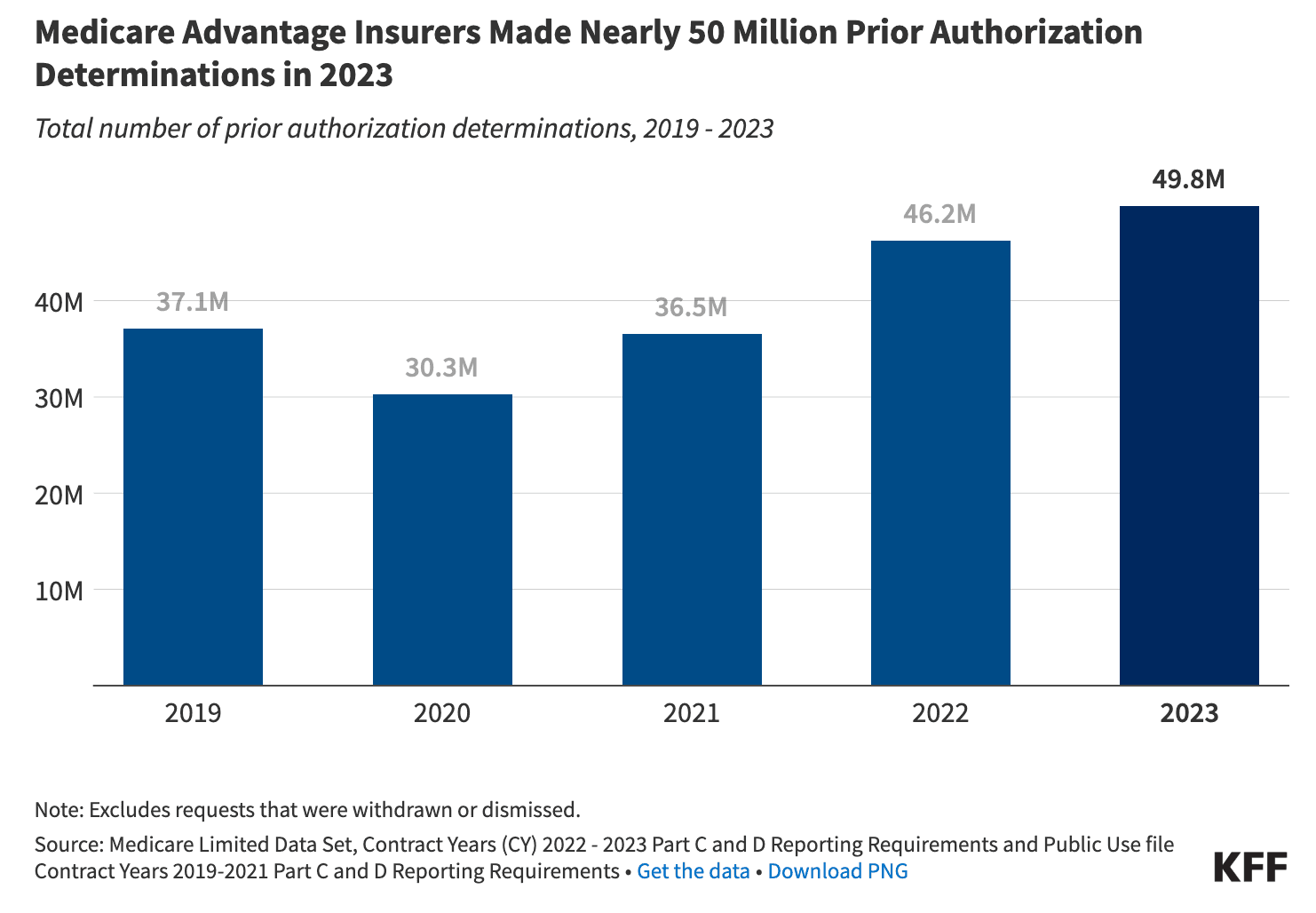
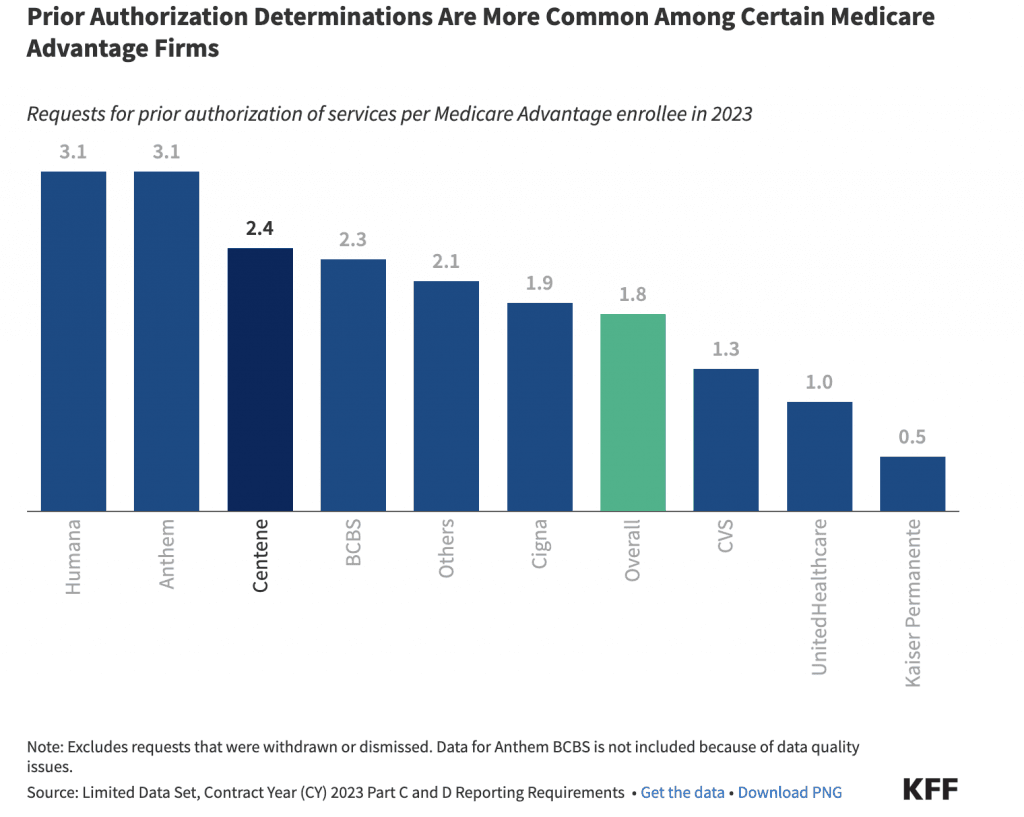
To illustrate the scale of this issue, the Kaiser Family Foundation recently analyzed major Medicare Advantage carriers and tracked the average volume of authorization requests they process.
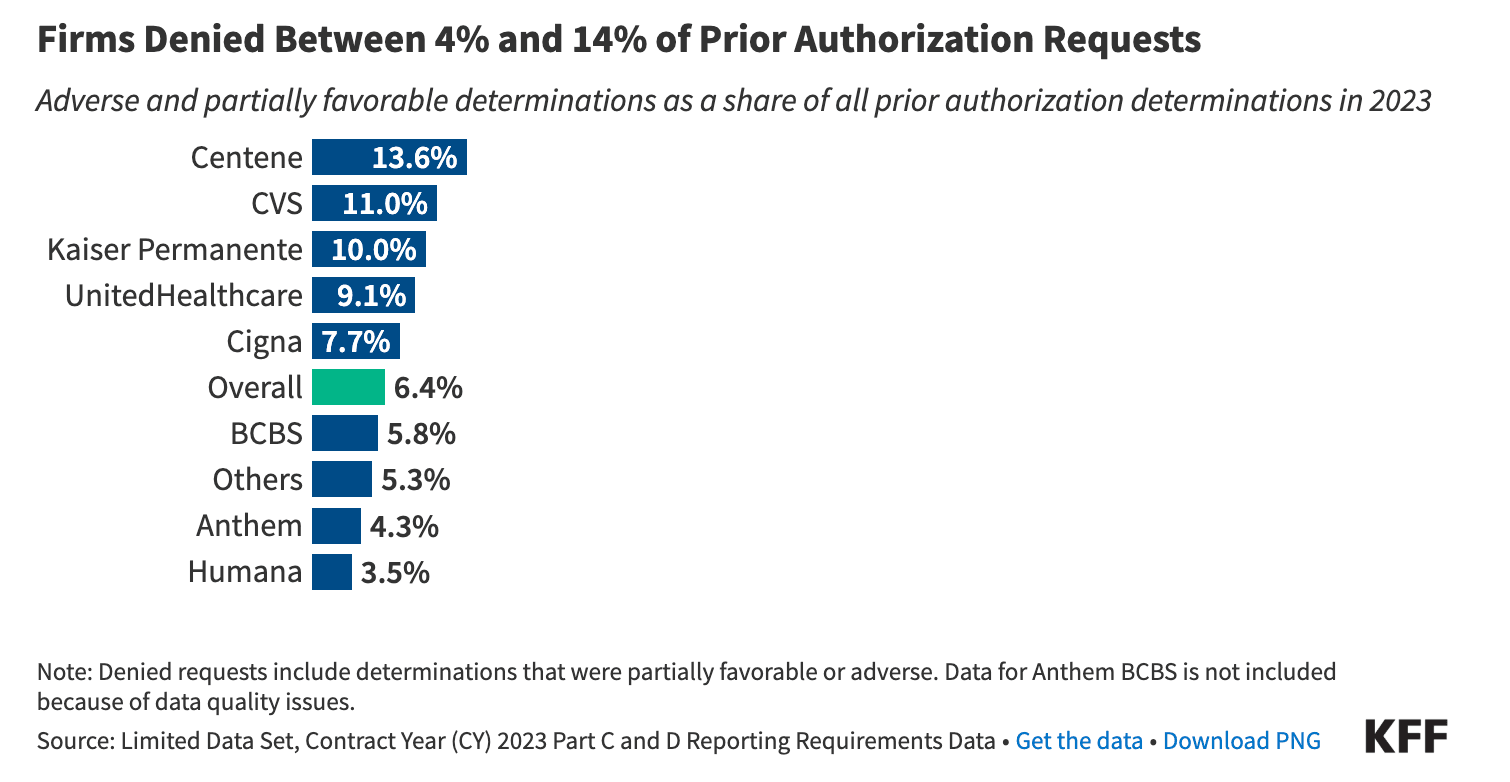
A staggering volume of requests isn't inherently catastrophic—provided those requests are consistently approved. The real threat to your health emerges when we look at the rate of denials. If a carrier frequently rejects claims, the administrative friction directly threatens your well-being.
Insurance companies wield the power to deny coverage if their internal guidelines deem a particular service "medically unnecessary." This systematically strips doctors of the flexibility needed to treat their patients effectively. The Kaiser Family Foundation's findings underscore the severity of this issue:
- Medicare Advantage insurers fully or partially denied over 3.2 million (6.4%) of all prior authorization requests.
- Only about 11.7% of those denials were actively appealed by patients or providers.
- Astoundingly, a massive majority (81.7%) of these appeals led to the initial denial being fully or partially overturned—proving that many initial rejections are fundamentally flawed.
How to avoid issues with prior authorization
Like it or not, navigating prior authorizations is part and parcel of choosing a Medicare Advantage plan. The system is designed this way to manage broad health claim expenditures, theoretically preventing the skyrocketing premiums that would inevitably impact all beneficiaries, even the healthiest among us.
Medicare is incredibly complex. Securing the right coverage shouldn't be.
High Out-of-Pocket Expenses
It's incredibly easy to be lured in by the $0 premiums heavily marketed by Medicare Advantage plans. However, what you save up front, you might end up paying exponentially on the back end through relentless out-of-pocket costs. While these plans look mathematically cheaper than carrying a Medicare Supplement (Medigap) policy month-to-month, they mask substantial copays, steep coinsurance rates, and aggressively high Maximum Out-of-Pocket (‘MOOP’) limits. In fact, MOOP ceilings can spike to $9,200 for strictly in-network services, and a devastating $13,300 for combined in- and out-of-network care (assuming the plan even permits out-of-network providers). One major health event could abruptly saddle you with five-figure medical debt.
How to avoid issues with out-of-pocket expenses
Protecting your nest egg requires brutal honesty about your projected healthcare consumption. Before committing to any policy, scrutinize the specific out-of-pocket obligations mapped to the treatments you realistically anticipate. If you're generally robust and only swing by the clinic for preventative screenings, a higher MOOP might be an acceptable gamble. Conversely, if you are actively managing a chronic condition that demands relentless specialist visits, imaging, and lab work, those seemingly small copays will snowball. Discuss your medical trajectory thoroughly with a licensed insurance agent before signing any dotted lines.
Plans with Questionable Provider Networks
One of the greatest luxuries of Original Medicare is the sheer breadth of access: you can be treated by nearly any doctor or hospital nationwide that accepts Medicare. That equates to the vast majority of physicians and virtually all major hospital systems from coast to coast.
By stark contrast, Medicare Advantage radically shrinks your geographic and clinical footprint. These plans rely entirely on proprietary, restricted networks of doctors and facilities to control their bottom line.
The most glaring red flag of a subpar Medicare Advantage plan is a painfully narrow, inadequate provider network. If you live in a rural area or suddenly develop a condition that requires an out-of-town specialist, a restrictive network isn't just an inconvenience—it's a barrier to life-saving care.
The volatility of network participation is well-documented. An in-depth analysis revealed that on average, Medicare Advantage networks encompassed fewer than half (46%) of all Medicare-eligible physicians in a given county. Even more alarming, the Centers for Medicare and Medicaid Services (CMS) has explicitly warned that a disturbing number of plans have actively failed to comply with basic federal "network adequacy" standards in recent years.
How to avoid issues with narrow provider networks
To be fair, a tightly curated network isn't inherently malicious—it often allows the plan to heavily coordinate and optimize your care. However, the onus is completely on you to verify that your essential physicians, preferred hospitals, and necessary specialists are unequivocally in-network before locking in your enrollment. If you split your time between two states as a "snowbird" or travel frequently, prioritizing a carrier historically known for sprawling, national network access is non-negotiable.
Low CMS Star Ratings
As an objective measure of performance, Medicare Advantage plans frequently score lower on quality metrics than traditional Medicare. To keep insurers accountable, the Centers for Medicare and Medicaid Services (CMS) grades Medicare Advantage offerings on a rigorous five-star scale, evaluating crucial criteria such as clinical outcomes, customer service responsiveness, and overall member satisfaction.
Worryingly, an increasing number of Medicare Advantage plans have recently plummeted to three stars or lower, contributing to an undeniable trend where star ratings have declined overall. A persistently poor score is a glaring indicator that a Medicare Advantage plan is fundamentally failing to deliver adequate, reliable care when stacked against superior alternatives.
According to the latest CMS data, the average star rating across the industry—weighted by total enrollment—slid to a mediocre 4.04 stars in 2026, dropping noticeably from 4.14 stars in the previous cycle.?
When we examine the six behemoths of the Medicare Advantage space, their internal grading breakdowns reveal wild inconsistencies in quality:
| Carrier | Highest rating | Lowest rating | Median rating | Total number of MA contracts |
| Aetna | 4.5 | 2.5 | 4.0 | 45 |
| Centene | 4.0 | 2.0 | 3.0 | 106 |
| Cigna | 4.5 | 3.0 | 3.5 | 17 |
| Elevance (Anthem BCBS) | 5.0 | 2.5 | 3.5 | 46 |
| Humana | 5.0 | 3.0 | 4.0 | 48 |
| United Healthcare | 5.0 | 3.0 | 4.0 | 75 |
How to avoid issues with low-rated plans
Thankfully, almost every established plan is assigned a CMS star rating. The only exception occurs when a plan is deemed ‘too new,’ lacking the requisite historical data to be judged fairly. When you're agonizing over two seemingly identical plans, the star rating should absolutely be your ultimate tie-breaker. If a plan is too new to boast a score, zoom out and investigate the carrier's broader portfolio. Averaging the grades of their other operational plans will give you a highly accurate snapshot of their corporate commitment to patient care.
What else to look for
There's no denying that Medicare Advantage plans provide immediate relief for cost-conscious seniors. It's incredibly comforting to see $0 copays for routine primary care visits. However, this safety net frequently vanishes the moment you face a serious, high-stakes medical crisis, where your out-of-pocket exposure mirrors the daunting 20% coinsurance of Original Medicare.
Keep a vigilant eye out for crippling costs in these critical areas:
- Durable Medical Equipment (DME): Essential medical hardware can decimate a fixed budget. Almost universally, Medicare Advantage plans offload a massive 20% cost-sharing burden onto the patient for durable medical equipment. This brutal coinsurance applies to everything from life-saving CPAP and oxygen machines to indispensable wheelchairs and heavy-duty mobility devices.
- Part B Drugs: The financial shock of clinical pharmaceuticals cannot be overstated. When a doctor administers specialized medications directly in a clinical setting—such as complex infusion therapies or vital chemotherapy for cancer patients—you are again slammed with that rigid 20% coinsurance under almost every Medicare Advantage structure. Keep in mind, this is entirely separate from the standard pharmacy medications governed by your Medicare Part D prescription drug plan.
- Dialysis for End-Stage Renal Disease (ESRD): Navigating ESRD is an emotional and physical battle that permanently tethers patients to life-sustaining dialysis treatment. Unfortunately, beneficiaries battling kidney failure are routinely subjected to a relentless 20% coinsurance for every single session until they finally hit their plan's maximum out-of-pocket ceiling. The result is a terrifying financial strain piled directly on top of a life-altering diagnosis.
What to do if you demand more comprehensive coverage
If the thought of battling restrictive networks and ballooning copays leaves you anxious, it is strongly advised to explore a Medicare Supplement (often referred to as Medigap) policy. These plans are specifically engineered to provide absolute peace of mind through what many consider 'Cadillac' level coverage.
By design, Medicare Supplement plans systematically eradicate nearly all of the structural headaches and financial ambushes detailed above. However, the objective reality is that Medigap's premium pricing makes it financially inaccessible for some, and restrictive medical underwriting rules can flatly disqualify others.
If your circumstances dictate that you must enroll in a Medicare Advantage framework, never navigate the decision blindly. Protect yourself by meticulously weighing your options alongside a licensed, independent insurance agent who specializes entirely in Medicare.
Medicare Advantage Plans may not be the optimal choice for your health
There is no universal solution in healthcare. While Medicare Advantage programs certainly act as a powerful tool for budget-conscious seniors, treating them as a flawless alternative to Original Medicare is a dangerous oversight. Between grueling prior authorization battles, terrifying out-of-pocket maximums, claustrophobic provider networks, and dismal CMS quality ratings, the pitfalls are profound. Before signing your health away to a Medicare Advantage contract, demand complete transparency. Audit your ongoing medical needs, confront the worst-case financial scenarios, and relentlessly compare your options on the strict basis of true coverage quality, not just the marketing brochures.
Frequently Asked Questions
What is the biggest disadvantage of Medicare Advantage?
Without question, the most glaring danger of a Medicare Advantage policy is the claustrophobic limitation on which providers you're allowed to see. If you are diagnosed with a rare or complex condition that demands specialized, top-tier medical facilities, a restrictive network can abruptly block your access to the exact experts you desperately need.
Why do people dislike Medicare Advantage plans?
Frustration with Medicare Advantage almost universally stems from its aggressive micromanagement of your healthcare. Enrollees quickly grow resentful of the suffocating network constraints and the sheer exhaustion of battling insurance bureaucrats for prior authorization before their doctor can administer crucial care.
Adding insult to injury, a pervasive myth has convinced millions that a Medicare Advantage plan is entirely free. While the zero-dollar monthly premium is heavily advertised, the reality is that members are consistently battered by hidden out-of-pocket copays and relentless coinsurance fees the moment they actually need medical intervention.
Can I drop my Medicare Advantage plan and go back to my Original Medicare?
Yes, you absolutely can escape a restrictive Medicare Advantage plan and return to traditional Medicare, provided you time it right. You are legally permitted to make this vital switch during the Medicare Advantage Open Enrollment period or the general Annual Enrollment Period. Outside of these two specific windows, however, you are effectively locked in unless you experience a drastic life event—a qualifying situation that triggers a protective ‘Special Enrollment Period,’ granting you an immediate exit route back to Original Medicare.
What are the best Medicare Advantage plans?
In the complex world of insurance, there is simply no such thing as a unilaterally "best" Medicare Advantage plan. Healthcare is inherently deeply personal, and a policy that works flawlessly for your neighbor could easily plunge you into medical debt if it doesn't cover your specific prescriptions or trusted specialists.
Don't gamble with your health.
Sources
- KFF
- Medicare Advantage 2026 Spotlight: A First Look at Plan Premiums and Benefits. Published March 26, 2026. Available at: kff.org. Last Accessed April 2, 2026.
- KFF: Nearly 50 Million Prior Authorization Requests Were Sent to Medicare Advantage Insurers in 2026. Published March 19, 2026. Available at: kff.org. Last Accessed April 2, 2026.
- KFF: Medicare Advantage: How Robust Are Plans? Physician Networks? Published October 5, 2026. Available at: kff.org. Last Accessed April 2, 2026.
- Fierce Healthcare: Medicare Advantage Plan Star Ratings Decline Again for 2026. Published October 13, 2026. Available at: fiercehealthcare.com. Last Accessed April 2, 2026.
- Centers for Medicare & Medicaid Services (CMS): 2026 Medicare Advantage and Part D Star Ratings. Published October 13, 2026. Available at: cms.gov. Last Accessed April 2, 2026.